
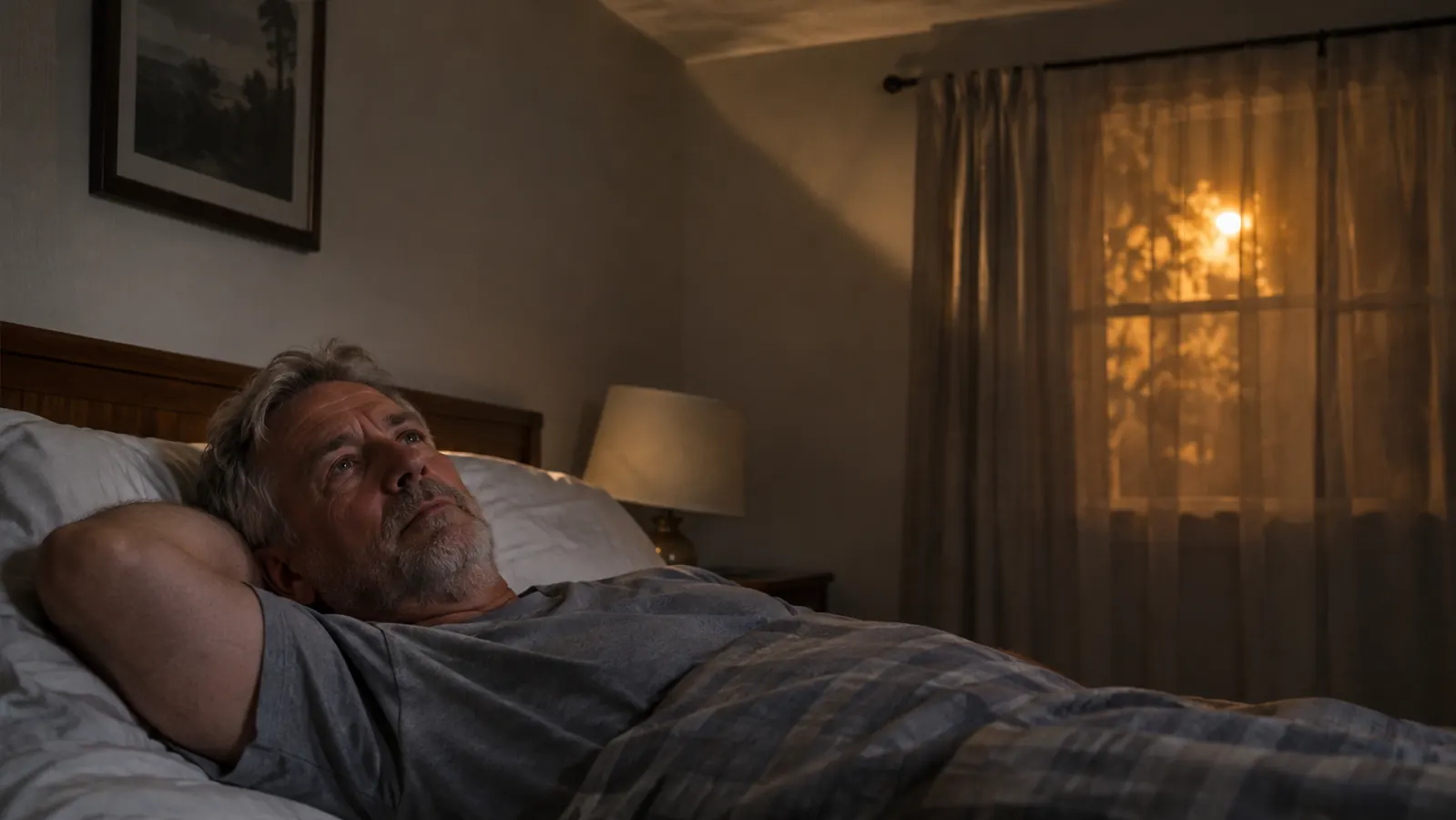
The streetlight outside our bedroom window is not going anywhere. Back when I worked rotating shifts I did not think about it at all. Then I retired after thirty years of rotating shifts at the paper mill, and for a solid year I woke at three or four in the morning, and the first thing my eyes found every single time was that light coming through the curtains.
Sleep was supposed to fix itself once I stopped working nights. It did not. I was not sick. My family doctor checked me over and found nothing that needed treatment, and I was not about to start on pills at 61. So in October of last year I sat down at the kitchen table with a yellow legal pad and wrote out the five things that were waking me or wearing me out. Noise. Light. A sore neck. Overheating. Dark mornings. Light was second on that list, and the fix for it turned out to be the Manta Sleep mask, an adjustable mask with detachable eye cups that now lives on my nightstand and goes on at bedtime every night. What follows is what I actually did, in the order I did it, and what I would tell a neighbor to do the same way.
The streetlight stopped being the reason I was awake
Adjustable, with detachable eye cups and a strap that fastens with hook and loop. Hand wash it in the sink about once a month. It took me two nights to place the cups and about a week to stop noticing the mask at all.
Amazon Check Today's Price on Amazon →How I Did It, Step by Step
Step 1: Find the light that actually reaches your eyes
A room can be dim and still be too bright where it counts. The streetlight does not light up the whole room. It comes in around the edges of the plain curtains, and when I lie on my side facing the window, that light lands right at eye level. That is the difference between a bright room and a bright spot, and the bright spot is the one that wakes you.
Do this at the hour you actually wake up, not at ten at night when you go to bed. If you are waking at three or four the way I was, go stand in the doorway at three in the morning and look at the room the way you would from the pillow. You will see things you do not see at bedtime. My wife Joyce has never once complained about that streetlight, and she sleeps through it, which tells you how much of this is about where the light lands on a particular face.
Then write it down. Mine went onto the legal pad as one word, light, but I knew exactly where it was coming from, and that told me what a fix had to cover. A fix has to cover the light reaching your eyes, not the whole window.
Step 2: Decide what to change and what to leave alone
The obvious answer is blackout curtains, and I want to be straight with you about why I did not buy them. Joyce likes the window. She likes waking up to daylight and she likes the look of the room, and the plain curtains we have are staying up. I could have argued the point. It would have cost more than a sleep mask and it would have made the bedroom into a negotiation every time the subject came up.
So the fix had to sit on my face instead of on the wall. That has three practical advantages. It changes nothing about the room, so nobody else has to agree to it. It travels with you if you ever sleep somewhere else. And it works whether the light is coming from the street, from a hallway, or from a window you cannot cover because the landlord or your wife has other plans for it. Whatever you pick, pick something you will keep doing at ten at night when you are tired and do not want a project. That is the real test.
Step 3: Fit the mask so it seals at the nose and above the cheekbones
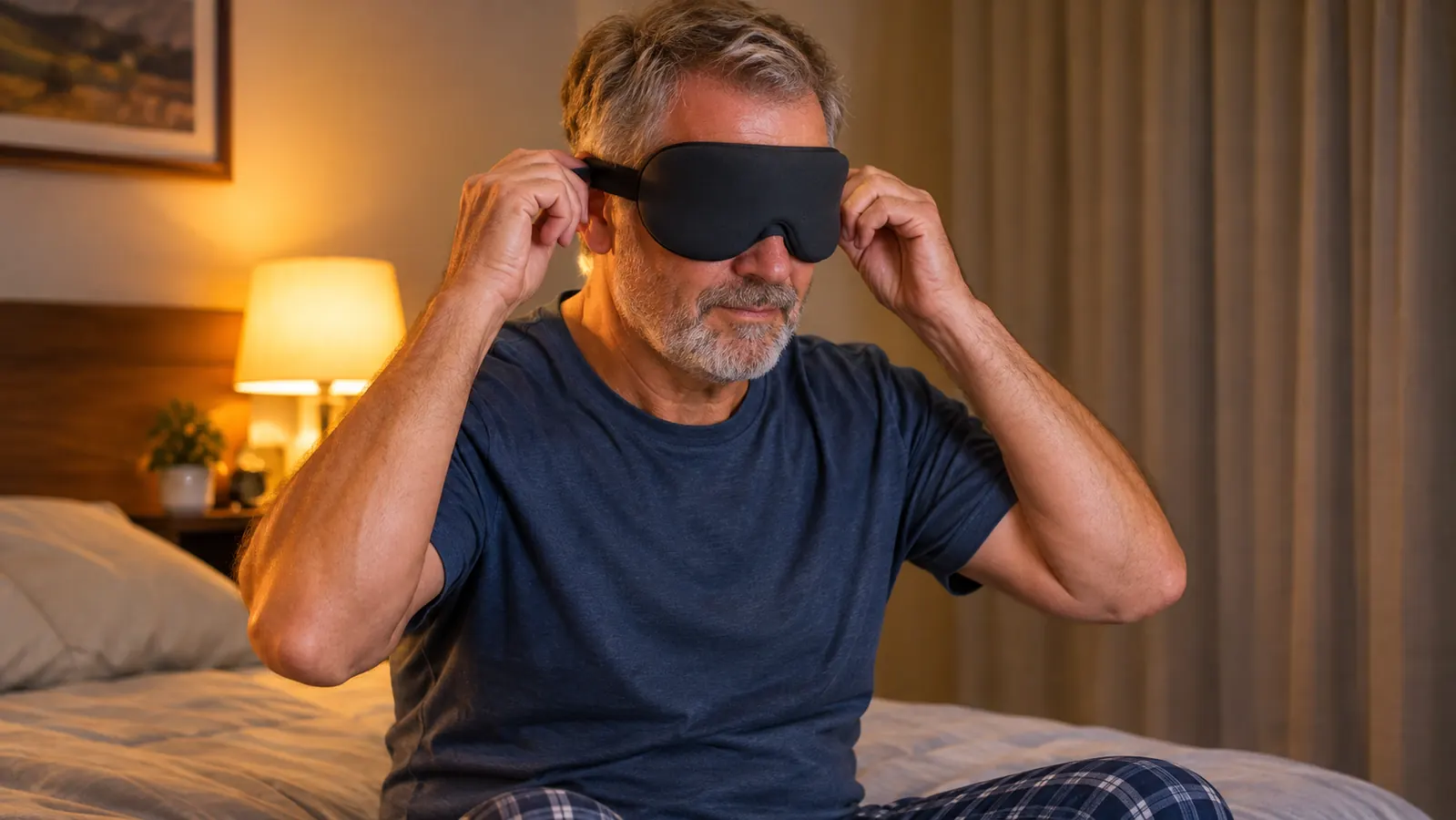
The first two nights were about placement, not sleep. The eye cups on the Manta Sleep mask are detachable and the strap adjusts with hook and loop, which means there is a correct position for your face and it is not the position it comes out of the box in. Move the cups until the padding sits above your cheekbones and your eyelashes have room. Then turn the light off, lie down, and check the one spot that matters.
The nose. That is where light gets in on almost every mask, and it is where it got in on mine the first night, a sliver down one side. On the second night I had it. That is the two nights people talk about, and it is real, but it is fitting work, not sleep. The week after that was just my head getting used to something on my face, and by about day seven I was putting it on and forgetting it was there.
The mask I had before this was a flat foam one from the drugstore that I bought during the bad year, well before I wrote the list. It let light in at the nose and it slid up in the night. The Manta Sleep mask has never come off by itself and it has never slid off in the night. If you have ever woken at three in the morning with a mask around your ear, that difference is the whole thing, and it comes from the cups sitting on your face rather than a flat panel pressing on your eyelids.
Step 4: Set your pillow so the mask does not press
I sleep on my side, and the cup on the pillow side can press into your face a little until the pillow is set right. It is not painful, it is just noticeable, and noticeable is enough to keep you from dropping off. The fix was not a new pillow. It was sliding the pillow out an inch and tucking the near corner so the cup rests against the pillow instead of being shoved into my cheek. Now I can lie on either side. If you sleep on your back or your belly you may never run into this at all.
My neck was a separate item on the list, third from the top, if you want the exact order: noise, light, neck, overheating, mornings. An adjustable pillow I set up over three evenings handles the neck, and I mention it only so you do not blame the mask for a neck problem that was already there.
Step 5: Decide what happens at 4am and at 6:30am
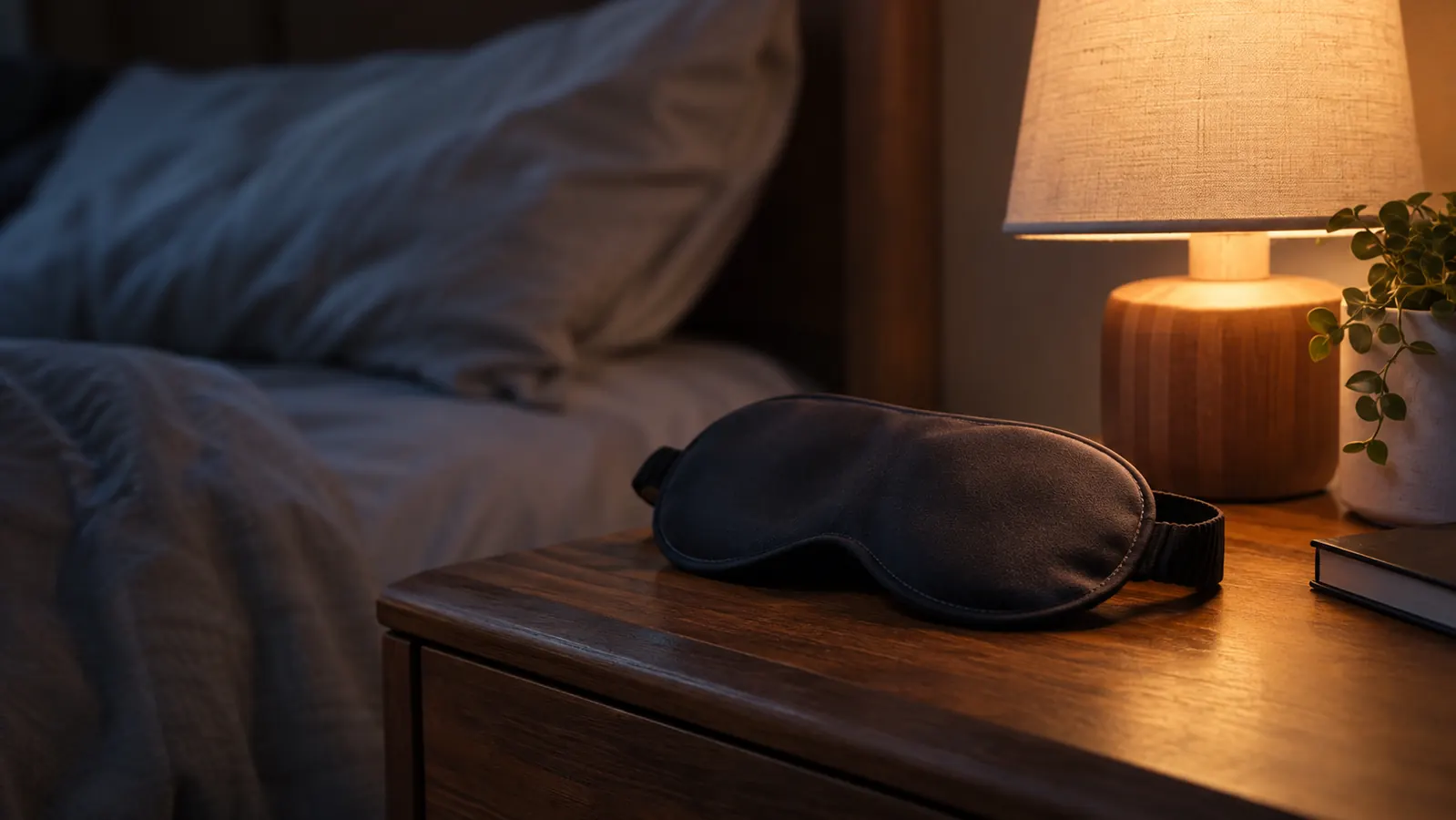
This is the part nobody warns you about, and it is the part I am still working out. Most nights I wake once around four for the bathroom. The mask comes off, lands on the nightstand, and stays off until morning. It has never come off on its own. I take it off.
That has a consequence. My alarm is a wake-up light on the same nightstand, and the sunrise starts at six with a bird sound at six thirty. Because the mask is usually off by four, most mornings that sunrise reaches me and the day starts gently. But on a morning when I sleep straight through with the mask on, the light does nothing for me and the bird sound does the waking. I am not going to pretend those two devices work together perfectly. They do not. What I did was decide that the mask earns its place at bedtime and the light earns its place at six, and most nights they split the job down the middle.
If you have a wake-up light and a mask, decide which mornings matter to you. If you want the sunrise to wake you, take the mask off when you get up in the night, the way I do. If you would rather sleep through and be woken by sound, leave it on. Both work. What does not work is expecting a mask to block light and let light in at the same time.
What Else Helps
Darkness was one of five things on my list, and on its own it would not have been enough. A covering sound on the dresser across the room, running on low all night, took care of the furnace that thumps when it starts and the neighbor's pickup that fires up around five. A lighter blanket on my half of the bed took care of running hot. The pillow took care of the neck. The wake-up light took care of dark mornings, and it also stopped me lying there in the dark arguing with myself about whether it was time to get up. Each one does one job. None of them overlaps with the mask, which is why I could tell within a week that the mask was working.
Two more things. Keep the mask clean. I wash mine by hand in the sink with a little soap about once a month, then hang it over the faucet to dry. It is not a chore worth avoiding and it keeps the thing from getting grubby against your face every night. And give it a week before you decide. The first two nights are fitting, the next several are your face getting used to it, and judging a sleep mask on night one is like judging a new pair of boots on the walk to the mailbox. Set the strap snug enough that the cups stay put and loose enough that you are not aware of it. If the side against the pillow presses, adjust the pillow before you blame the mask. Most of what feels wrong in the first few nights is placement, and placement is something you can fix in a minute. If you have been sleeping badly for a year or more, and I had, tell your doctor what is going on before you buy anything at all. Mine found nothing that needed treatment, and I was still glad I asked.
It took two nights to get the eye cups placed and about a week before I quit thinking about the mask. The streetlight is still out there. It just stopped being the reason I was awake.
If light is second on your list, this is the fix for number two
One adjustable mask with detachable eye cups and a hook and loop strap, hand washed in the sink once a month. Give it a week before you judge it. Today's price is on the listing.
Amazon Check Today's Price on Amazon →