
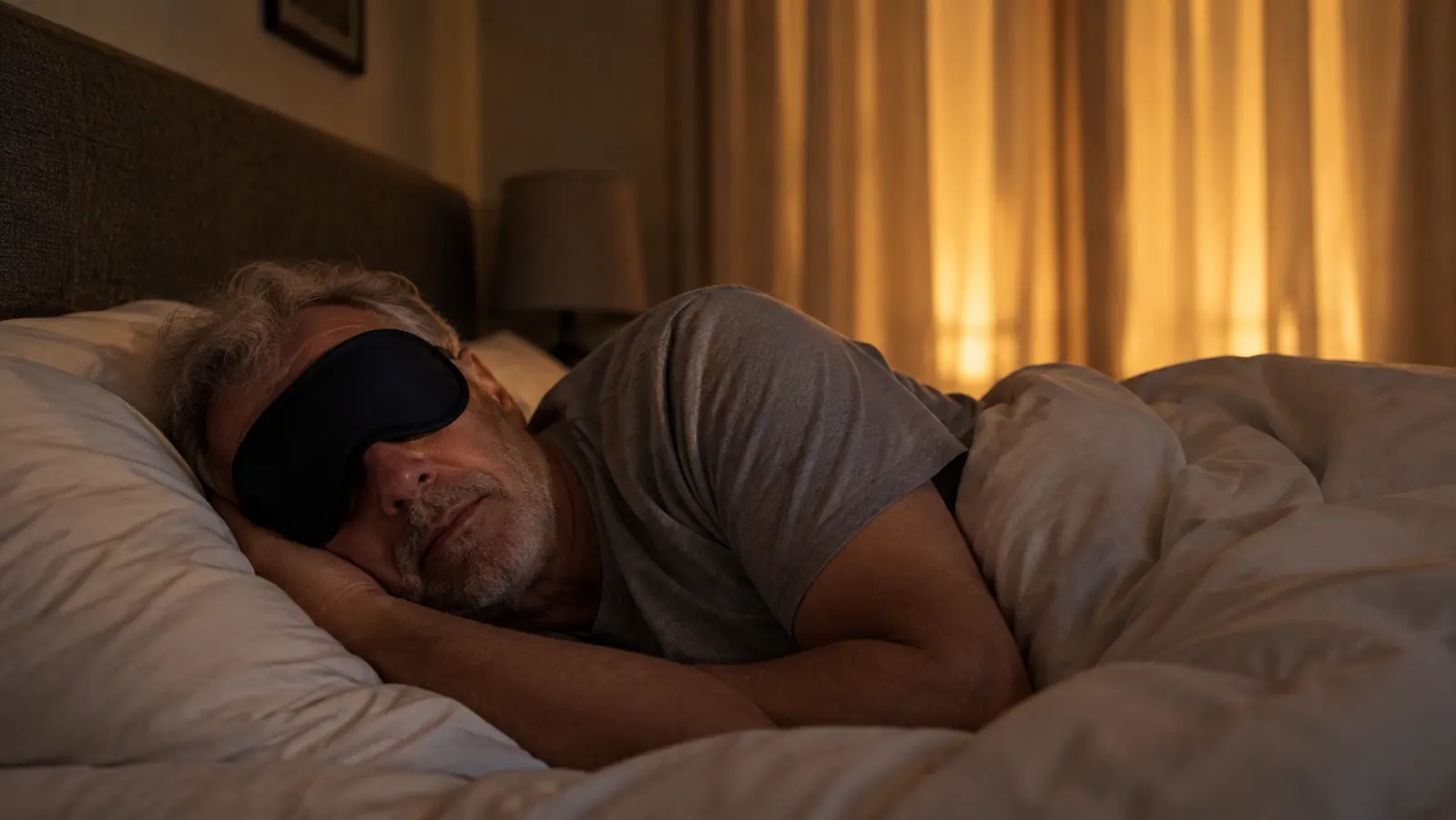
Here is the thing I would want somebody to tell me before I spent money on a contoured sleep mask: the light is the easy part. Your face is the hard part. I bought the Manta Sleep Mask in October of last year, in one order with four other things I had written down on a yellow legal pad at the kitchen table, and the streetlight outside my window stopped bothering me on the second night. Getting the mask to sit the same way on my head two nights running took longer than that.
I am 61. I retired two years ago after thirty years of rotating shifts at a paper mill here in Green Bay, and my sleep did not straighten out when the shifts stopped. For a full year I woke three or four times a night. My family doctor checked me during that year and found nothing that needed treatment, which was good news and no help at three in the morning. When I finally sat down and made the list, light was second on it, right behind noise. The bedroom window faces the street and there is a streetlight directly outside it. The curtains are plain and they stay up, because Joyce likes the window. So the answer was never going to be a curtain. It was going to be something I wear on my head, and the Manta Sleep Mask is the one I ended up with.
The Quick Verdict
It kills the streetlight at the window and it does not press on your eyes. Budget two nights to place the cups, and expect to re-set them after every hand wash.
Amazon Check Today's Price →The streetlight is the easy half. Budget two nights for the fit.
Detachable eye cups you position yourself, an adjustable hook and loop strap, and a seal that sits around the eye rather than across it. Look at today's price on Amazon and read the return terms before you order.
Amazon Check Today's Price on Amazon →How I Have Actually Used It
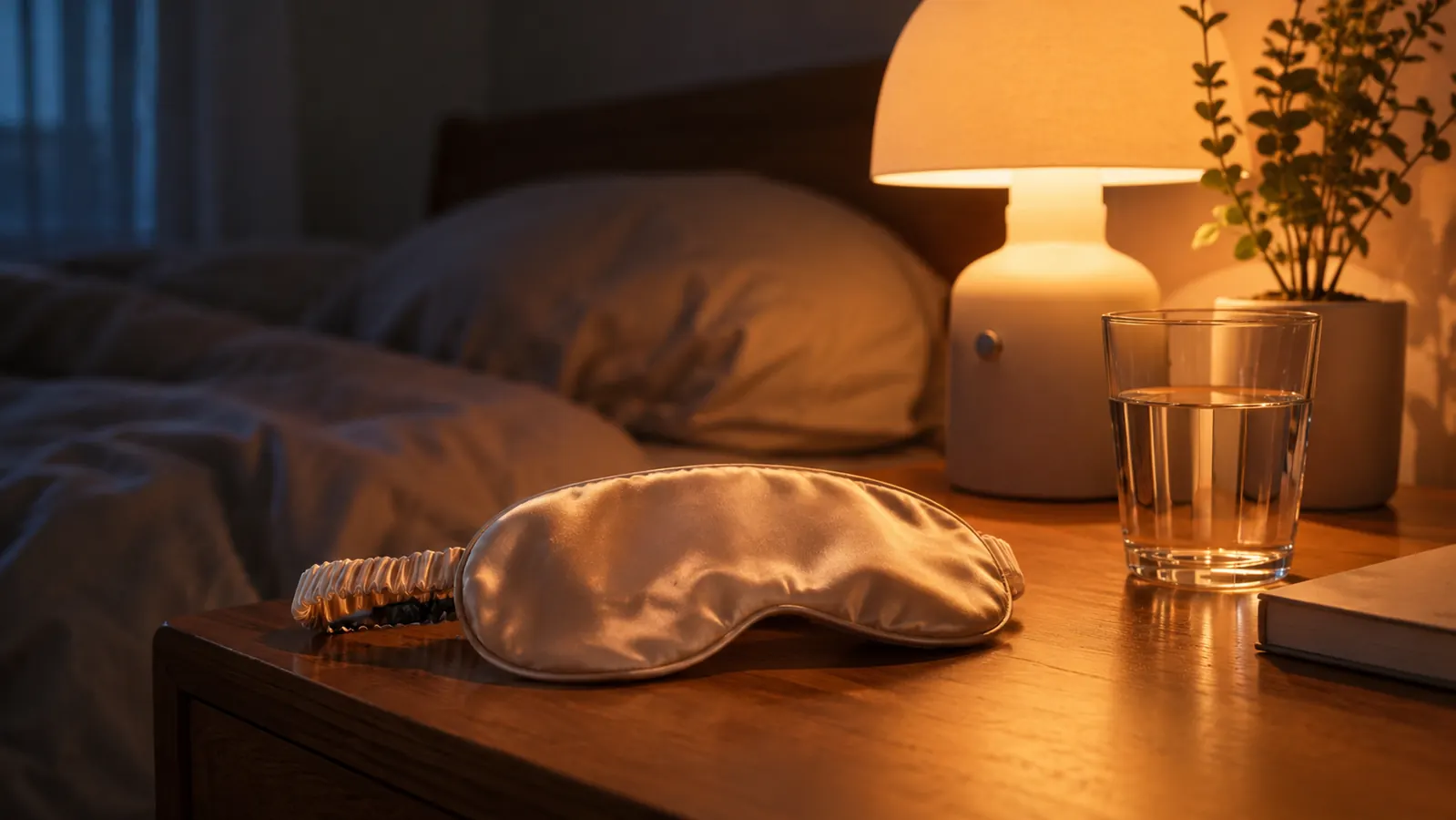
On at bedtime, every night, around ten o'clock. That part has not changed in thirteen months. What has changed is what happens at four in the morning. Most nights I get up for the bathroom around four, the mask comes off and lands on the nightstand, and it stays there until the alarm at six thirty. I want to be straight about that, because plenty of reviews make it sound like the mask stays on until morning every single night. Mine usually does not. But it has never come off by itself and it has never slid off in the night. Every time it comes off, I took it off myself, half asleep.
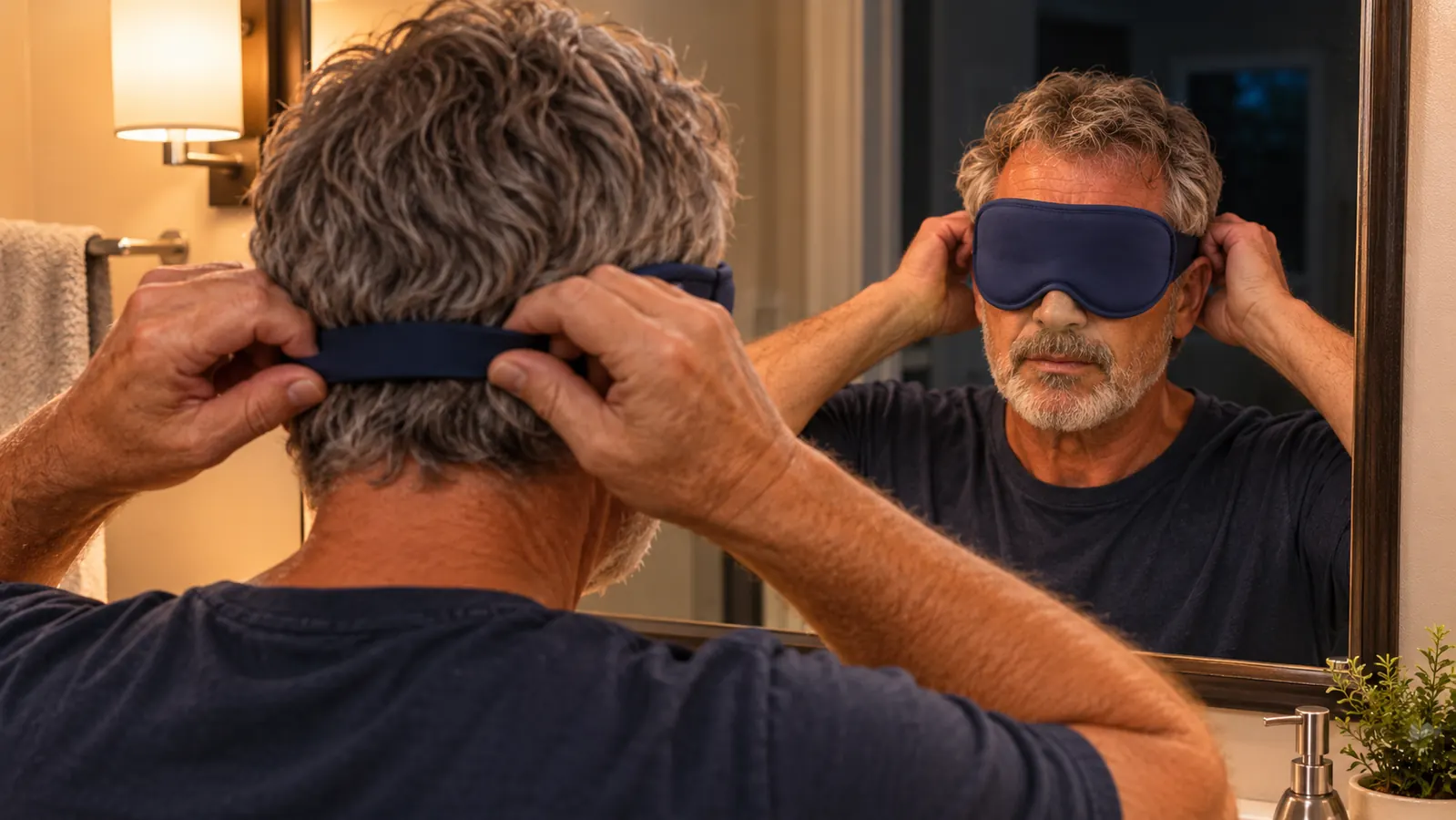
The first two nights were for placing the eye cups. The cups come off the strap and go back on, and until you find the spot where each one sits around your eye instead of on it, you will catch a sliver of light coming in at the side. The first night I had them too close together. The second night I moved them out and the light went out. After that it was about a week before I stopped thinking about the mask at all, which is the only real test of anything you wear to bed.
The material the listing describes as soft and breathable is exactly that. It does not feel like plastic against the skin and it does not go damp and clammy the way my old drugstore mask did. The strap closes with hook and loop, so it tightens or loosens to whatever you want instead of to three preset holes. The listing gives the weight at 3.21 ounces. About once a month I wash it by hand in the sink with warm water and a drop of dish soap and hang it over the faucet to dry.
What Nobody Tells You: It Is a Fit Problem, Not a Light Problem
Every blackout mask claims blackout. Most of them are telling the truth about the fabric and fudging the edges. Light comes in where the mask meets your nose and your cheekbones, and no amount of thickness in the middle fixes that. That is why the flat foam mask I used during the bad year, the one from the drugstore, ended up in a drawer. It let light in at the nose and it slid around on my face. I never used the two side by side, so I am not going to pretend I ran some careful test. I just know which one is in the drawer and which one is on my nightstand.
What the Manta Sleep Mask does differently is put a cup around each eye instead of a flat panel across the whole face. The material sits around the eye and does not rest on the eyelid. That is the zero eye pressure idea in the listing, and in practice it means the seal is made on the bones of your face rather than on the soft part. It also means the mask has to match the shape of your face, and faces are not symmetrical. Mine is not. One cup ends up sitting a little further out than the other, and that is fine, because the cups are detachable and you can set each one where it needs to be.
Here is the part that costs you two nights. There is no marked position and nothing clicks into place to tell you that you have got it right. You put the mask on, you lie down, you check whether a line of light is coming in at the side, and if it is you sit back up and move a cup a quarter inch. Twice, in my case. Once I found it I have not had to hunt for it again, but I do put it on roughly the same way every night, and I know when I have not.
Thirteen months in, this is the only mask I have owned that seals at the nose. It took two nights of moving the cups a quarter inch at a time to get there.
The Adjustment Range Is Real, and So Is the Re-Setting
The strap is hook and loop, which means it adjusts to the head you have rather than to a small, medium or large somebody else decided on. That sounds like a small thing and it is not. My old mask was always either tight enough to leave a mark across my forehead or loose enough to shift when I turned over. With the Manta Sleep Mask I set the strap during the first week and I have not touched it since.
The catch is washing. Every hand wash means the cups come off and go back on, which means every wash is a fresh chance to lose the position you found. I have got it close to right each time, and it takes a minute of fiddling. If you are the sort of person who will not fiddle with a thing after you clean it, that will get on your nerves, and I would rather tell you now than have you find out in the dark.
Where the Mask and My Wake-up Light Fight Each Other
There is one honest conflict in my bedroom and I have not solved it. The lamp on my nightstand wakes me with a sunrise that starts at six and a bird sound at six thirty. A blackout mask defeats a sunrise lamp. That is simply true, and no amount of liking both products makes it untrue. What happens most mornings is that I am up at four for the bathroom, the mask goes onto the nightstand, and the sunrise reaches me the way it is meant to. On a morning when I sleep straight through with the mask on, the light does nothing at all and the birds do the waking.
I am not going to call that a flaw in either one. They are two good tools pointed at opposite problems. The mask is for the streetlight coming in all night. The lamp is for the light I want coming in at six in the morning. The only advice I have is to think about that before you buy both, or before you buy the mask believing it will get along with a sunrise alarm. On the mornings you sleep best, it will not.
Side Sleeping, Pressure, and the Pillow
I sleep on my side, which is the position most masks punish. The cup on the pillow side will press into the pillow, and if the pillow is too high the cup pushes back into your face. That is not the mask being badly made. That is the Manta Sleep Mask meeting a pillow that does not suit it. Once I had my pillow set the way I need it, the cup stopped being noticeable, and the side facing the ceiling does nothing at all.
On the pressure question: the material sits around the eye rather than on it, so I do not get that feeling of something pressing down on my eyelid, which is what made the foam mask unbearable by two in the morning. It is light on the face too. At the listed 3.21 ounces I stop noticing it once I am settled. If you notice the strap, you have it tighter than it needs to be. Loosening it fixes it, and loosening it does not let any light in.
One more limit worth saying out loud. The mask does not make the room dark. It makes your eyes dark. If a cup is in the wrong place you will still catch light at the edge, and the answer is to move the cup, not to crank the strap down. Tightening the strap is what everybody tries first, me included, and it is the one thing that turns a comfortable mask into a headache by morning.
What Thirteen Months Has and Has Not Changed
The Manta Sleep Mask itself has held up. I have owned exactly one, nothing has torn, nothing has stretched out, and the hook and loop still grabs the way it did in the first month. The strap has not crept looser over time. The cups have not gone flat or baggy. For something I have put on every night for thirteen months, that is more than I expected, and it is the reason I am still using it instead of shopping for another.
What has not changed is the routine. It is a mask, not a cure. I still wake around four most nights for the bathroom. Bad nights still happen and I do not have an explanation for them. When I do wake at four, the mask is not what woke me, and taking it off does not mean the night is over, because I usually get back to sleep. What I notice most is the front end of the night. Falling asleep is easier when there is no streetlight lying across the ceiling, and that is the whole of the claim I am making.
The Small Annoyances I Have Learned to Live With
The cups take up room. If you sleep with your face buried halfway into the pillow, you will feel the edge of a cup against your cheekbone until you shift. Some people will hate that. I got used to it in about a week, the same week I stopped thinking about the mask. The other annoyance is that putting it on in the pitch dark is a two hand job. I set it by feel, and if I am careless I put it on crooked and have to start over. That is not the mask being difficult. That is me at ten o'clock at night with the lamp off.
Then there is the washing, which I have already complained about, and the drying. It air dries overnight over the faucet, and in the morning it is ready. I have never had to skip a night because it was still wet. If you want one thing to hold against it, hold the two night setup against it, and hold the re-setting after a wash against it. Those are the honest costs. Everything else about it has been quiet and forgettable, which is what I want from anything I wear to bed.
What I Liked
- Seals at the nose and cheekbones, which is where my old flat mask leaked
- Detachable eye cups you position yourself, so an uneven face is not a problem
- Hook and loop strap adjusts to your head, not to preset sizes
- The material sits around the eye instead of on the eyelid
- Held up through thirteen months of nightly use with no stretching or wear
- Side sleeping works once the pillow is set right
Where It Falls Short
- Takes two nights of small adjustments before the fit is right
- Hand washing means re-setting the cups roughly once a month
- The cup on the pillow side can press against your cheekbone
- It defeats a sunrise alarm on the mornings you sleep through
- Fiddly to put on correctly in the dark
Who This Is For
This is for the person with a specific light problem they can point at. A streetlight, a porch light, a hallway light under the door, an early summer sunrise. If you can name the light and you have already tried turning your face away from it, the Manta Sleep Mask is aimed at you. It also suits anyone who has given up on flat masks because they leak at the nose or press on the eyelids, and anyone who sleeps on their side and needs the seal to survive a turn. And it suits the person willing to spend two evenings getting the fit right, because that is the entry fee and there is no way around it.
Who Should Skip It
Skip it if what you want is a mask you can pull on without thinking. This one rewards a little attention and punishes carelessness, and if you will not sit up and move a cup a quarter inch, you will be unhappy. Skip it if you want a sunrise alarm to wake you gently, because a blackout mask and a sunrise lamp cannot both do their jobs on the same morning. Skip it if you cannot be bothered with hand washing, since the cups have to come off and go back on each time. And if your sleep trouble is not light at all, if it is noise or a sore neck or something your doctor should look at, then this is the wrong purchase and I would rather say so. See your own doctor if bad sleep goes on for months. I did.
If you are still deciding whether the cups are worth the fuss, the order I would do things in is simple: name the light, try the cheap fix first, and only then spend on the shape of the thing.
Thirteen months later it is still on my nightstand at ten o'clock.
It sealed at the nose on the second night and it has not leaked since. Two nights of fitting, one hand wash a month, no pressure on the eyelids. Check today's price on Amazon.
Amazon See the Manta Sleep Mask on Amazon →