

For thirty years, a buzzer decided when my day started. I worked rotating shifts at the paper mill in Green Bay, the last stretch of it as a shift supervisor, and on early-shift mornings my old digital alarm clock went off at 4:40. It did not ease me into anything. It made a noise and my feet were on the floor before I knew what day it was. When I retired two years ago, I assumed the waking-up part would sort itself out. It did not. So last October I sat at the kitchen table with a yellow legal pad and wrote down five things that were wearing me out: noise, light, a sore neck, overheating, and dark mornings. Dark mornings went last on that list, and the Philips SmartSleep Wake-up Light is what I bought for it. The other side of this comparison is the plain digital alarm clock that sat on my nightstand for three decades and now lives in a dresser drawer.
Here is the short answer before the table. A regular alarm clock tells you the time and then makes a noise. The Philips lamp starts to glow at 6:00, builds light for half an hour, and plays a bird sound at 6:30. One wakes you with sound alone. The other wakes you with light first and sound second, which sounds like a small difference on paper and does not feel small in a dark bedroom in January. I used the buzzer for thirty years and the lamp for thirteen months, and I would not go back. But the old clock does several things better, and I am going to give it those, because a comparison where one side takes every row is not a comparison. It is an advertisement.
| Philips SmartSleep HF3520 | Regular alarm clock | |
|---|---|---|
| How it wakes you | Light builds from 6:00 to 6:30, then a bird sound | A buzzer at full volume, all at once |
| Wake-up sounds | Five natural sounds, plus FM radio | One buzzer tone |
| Light in the room | Doubles as a reading lamp, 20 brightness settings | A small digital display and nothing else |
| Snooze | Tap the lamp itself | Press the button on top |
| Footprint on the nightstand | Round and 1,113 g, it takes up real space | Small, and mine fits in a drawer now |
| Setup | Time, sunrise, sound, brightness, plus a display and radio to learn | Set the time and go to bed |
| Upfront cost | More than a plain clock | The least you can spend on waking up |
| Best for | Dark winter mornings and a gentler start | A loud, no-fuss wake-up and nothing else |
Where the Philips SmartSleep Wins
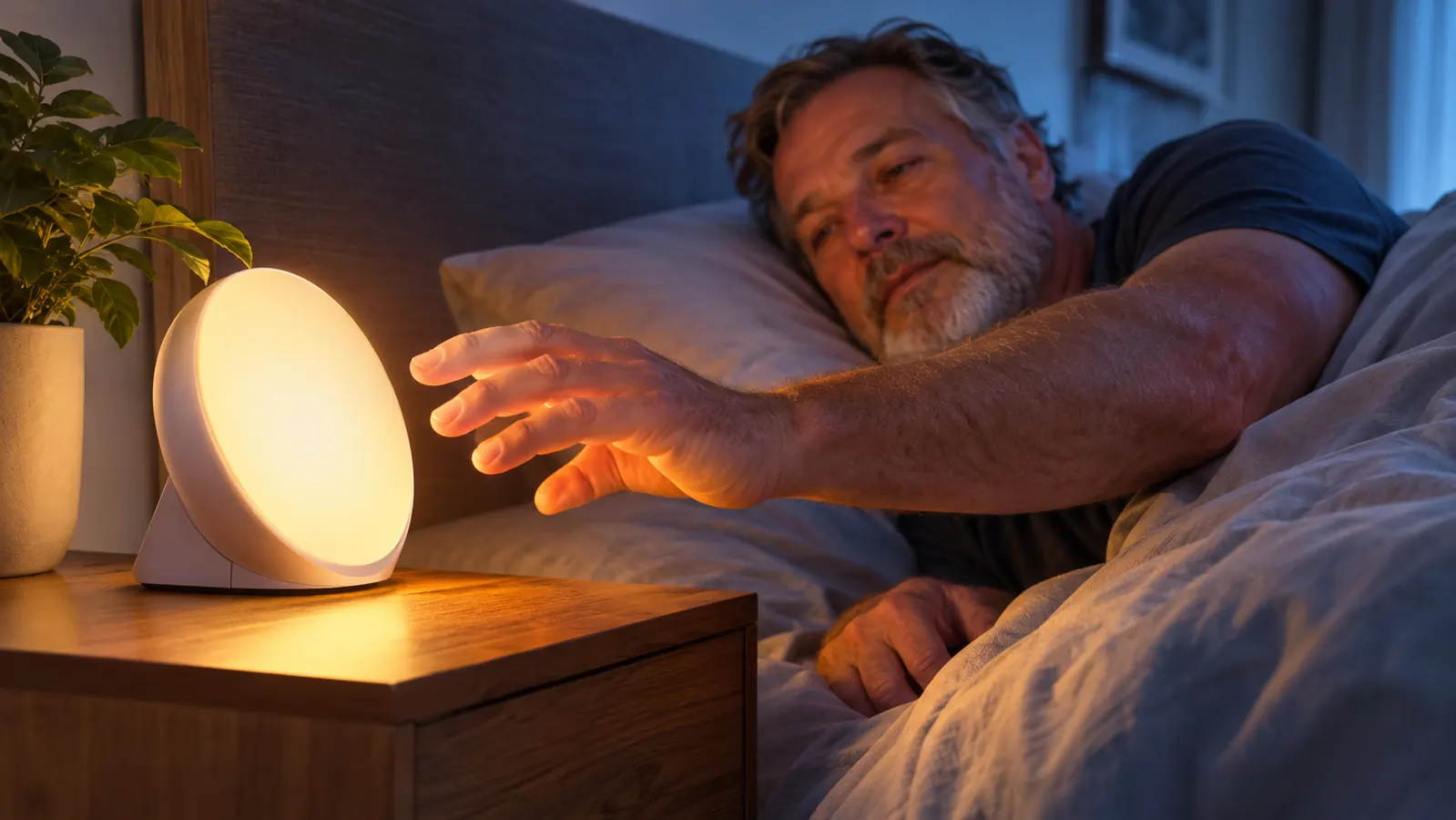
Green Bay gets dark in the morning. In late fall and through the winter, 6:30 is not sunrise, it is a streetlight and a black window, and for most of my working life a buzzer went off in that same kind of dark. The lamp changes the order of events. From 6:00 on, the room I am in stops being dark before anything makes a sound. By the time the birds arrive at 6:30, I have usually already turned over once and opened my eyes on my own. That is the whole trick, and it is not a medical one. Nothing in me got fixed. The last half hour of the night just got quieter and slower.
About two weeks in, and that put it in early November, the dark mornings stopped feeling like a shove. I am not going to dress that up into more than it is. It did not cure anything and it did not make me sleep longer. It made the waking end of the night gentler, and in November, at 61, that was worth something to me. The second thing it wins on is that the light is useful besides 6:30. It works as a reading lamp with 20 brightness settings, and the display dims on its own through the night. For a device that sits on a nightstand, being a good lamp the rest of the evening counts for a lot.
Where the Regular Alarm Clock Wins
Money and simplicity, and I am not going to be cute about it. The Philips costs more than a clock. It is a lot of machine for one job. My old clock had a button and a buzz. This one has a time to set, a sunrise to set, five sounds to pick from, a brightness level, a display, an FM radio I turned on exactly once to see that it worked, and a sunset I use a couple of times a month. Every one of those is something that can be set wrong at eleven at night when you are tired. The old clock could not be set wrong. You set the time and you were done for the year.
It also takes up less room, and that is a real cost on a small nightstand. The lamp is round and 1,113 g and it wants an outlet, so it has a permanent spot whether you like it or not. The clock is in a drawer now and takes up almost none of anything. And I will say the unpopular thing about the buzzer. It got me to the mill on time for thirty years. It was not the villain of my life. It was a tool that did one job loudly, and if loud is what works for you, it still does that better than anything with a sunrise in it. There is no half hour of ramp with a buzzer. It is 6:30 and you are awake.
If dark mornings are the thing wearing you down, this is the one on my nightstand
The Philips SmartSleep HF3520 starts lighting the room at 6:00 and plays birds at 6:30. It took about two weeks before dark mornings felt easier for me. Same lamp, thirteen months of use, no other changes to my routine.
Amazon Check today's price on Amazon →What the Sunrise Is Actually Like
Set the time, set the alarm for 6:30, pick your sound, and go to bed. The sunrise starts at 6:00 ahead of it. That is the entire setup, and after the first night it is not something you think about again. The light does not snap on. It comes up slowly, warm and dim at first, bright enough by the end that I can see the dresser without turning anything else on. The first week I woke up in the middle of the ramp and lay there watching it, which is not the point of the thing, but it tells you how gradual it is. Nothing about it is sudden.
I picked the birds out of the five natural sounds and I have not changed them since. Birds at 6:30 are not a jolt. They arrive when the room is already lit, so they read as a nudge rather than a fire alarm. I have hit snooze maybe a dozen times in thirteen months, and most of those were mornings after a bad night, not mornings the lamp failed. With the old clock I hit it every single day and hated myself a little by Friday. That is not a feature you will find on the box, but it is the one I noticed.
The Sounds, the Sunset, and the Rest of It
The sound list is five natural sounds plus the FM radio. I cannot tell you what the other four sound like beyond having heard them once while choosing, because I picked the birds and stopped there. The radio has been on once, long enough to confirm it works, and I have no opinion on it beyond that. The sunset runs a couple of times a month when I want the room to settle before bed, and it fades the light down instead of cutting it off, which is easier on the eyes than a lamp switch. It is there. I am glad it is there. I would not have paid extra for it.
What the lamp will not do is the part I want to be straight about. It is not a treatment for anything and it does not put you to sleep. It is a lamp on a nightstand that gets bright on a schedule. If you are waking up three or four times a night and it has been going on for a year, go see your own doctor before you buy anything. Mine checked me out and found nothing that needed treatment, and I still had the room around me to deal with. The lamp was the last item on my list, not the whole list.
It did not fix my sleep. It made the last half hour of it gentler, and in November, at 61, that was worth something.
The Mask Problem, and Other Honest Limits
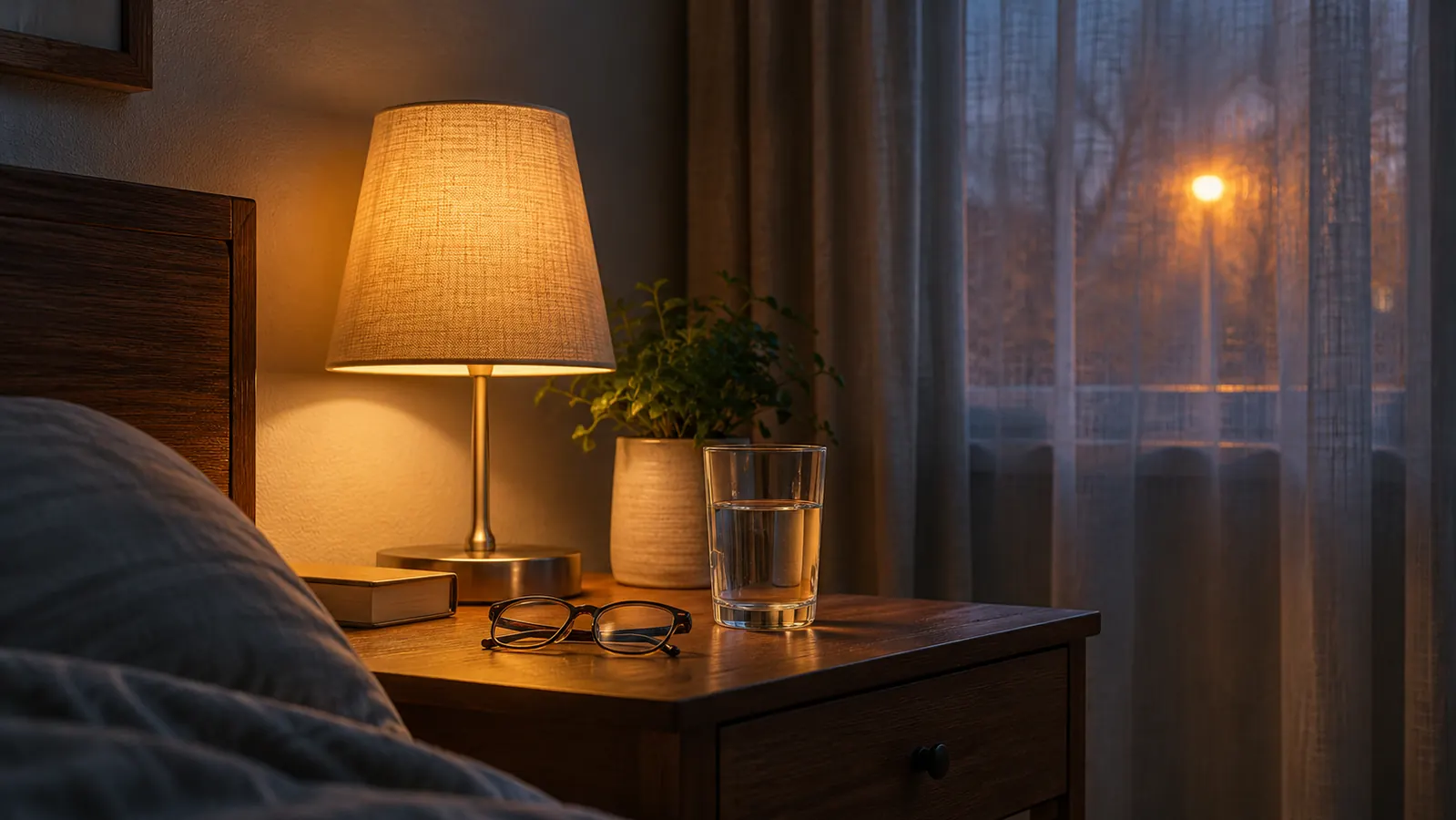
I wear a contoured sleep mask because there is a streetlight outside my window, and the two do not fully work together. Most mornings I take the mask off around 4:00 for the bathroom and leave it on the nightstand, so the sunrise reaches me the way it is supposed to. On a morning I sleep straight through with the mask on, I get the birds and no sunrise at all, which is a buzzer with better manners. I knew that going in and I kept both anyway, because the mask solves a problem the lamp cannot, and the lamp solves a problem the mask cannot. Nobody warned me they would argue. Consider this the warning.
The rest of it is small but real. It is round and 1,113 g, corded, and it wants a tabletop spot near an outlet, so on a crowded nightstand something has to move. It takes up the space a lamp takes up, no more and no less. And on a morning I am already awake at 6:00, the light keeps building for the full half hour whether I need it or not. That is a strange thing to lie there and watch, but it has never once bothered me enough to unplug it. My wife gets up later and turns her face away from it, and she has never complained beyond that.
Who Should Buy Which
If the thing that wears you down is the dark morning, the jolt, and the feeling of being yanked out of sleep by a noise, the Philips SmartSleep is the one to get, and give it two weeks before you decide. That is how long it took here, and the two week mark landed in early November, right when the mornings in Wisconsin get serious. If what you need is simple, loud, cheap, and impossible to misconfigure, buy a clock and put the difference toward something else on your own list. If you are on the fence, buy the lamp and keep the old clock in the drawer for a month. You will know by then which one you reach for.
One more piece of plain advice from a man who spent thirty years getting up in the dark. Name the problem before you buy anything. My list had five things on it and I ordered all five at once because I was tired of being tired, but none of them overlapped and each one only did its own job. The lamp does not cover the pickup truck next door and it does not close the curtains. It lights the room on a schedule and plays birds, and after thirteen months that is exactly what I would buy again.
The one thing that made November mornings easier
Philips SmartSleep HF3520. Sunrise at 6:00, birds at 6:30, a reading lamp the rest of the evening. Thirteen months on my nightstand, and the old buzzer is still in the drawer where it belongs.
Amazon Check today's price on Amazon →