

I bought the Philips SmartSleep Wake-up Light with my own money in October of last year, along with four other things, in one order from Amazon. It was the last item on a yellow legal pad list I wrote at my kitchen table after a full year of bad nights. Noise, light, a sore neck, overheating, dark mornings. The Philips was the dark mornings fix. I am sixty-one, I live in Green Bay, Wisconsin, and for thirty years I got up by buzzer for rotating shifts at a paper mill, at 4:40 on early shifts.
Here is the part nobody tells you before you buy one. The Philips SmartSleep is not a clock that lights up. It is a lamp that happens to have a clock in it, and that difference is the whole review. It has been on my nightstand for about thirteen months now, through one winter and one summer, and I can tell you exactly where it earned its spot and exactly where it made me sigh.
The Quick Verdict
Genuinely easier mornings in the dark months, at the cost of a lot of nightstand and a bit of your patience for the radio you will never use.
Amazon Check Today's Price →The lamp that starts your morning at 6:00 instead of 6:30
The Philips SmartSleep HF3520 begins its sunrise a half hour before the alarm and finishes with one of five natural sounds. Current price and the full listing are on Amazon.
Amazon Check Today's Price on Amazon →What I Actually Wanted From It
I need to be plain about what I was not buying. I was not buying a medical device and I was not buying a cure for anything. My family doctor checked me during that bad year and found nothing that needed treatment. What was happening to me was simpler than a diagnosis. In October and November, in this part of Wisconsin, it is still black at 6:30 in the morning. My old buzzer clock did not care. It went off in a dark room and my body argued with it every single day.
That is the whole problem the Philips addresses. Not sleep itself. The waking end of it. I wanted something in the room that told my body morning was happening before the noise started, instead of a buzzer telling me morning was happening by ambush. If that is your problem, keep reading. If your problem is falling asleep, this lamp will not help you at all and I would rather say so on the first page than let you find out in March.
How the Sunrise Actually Feels
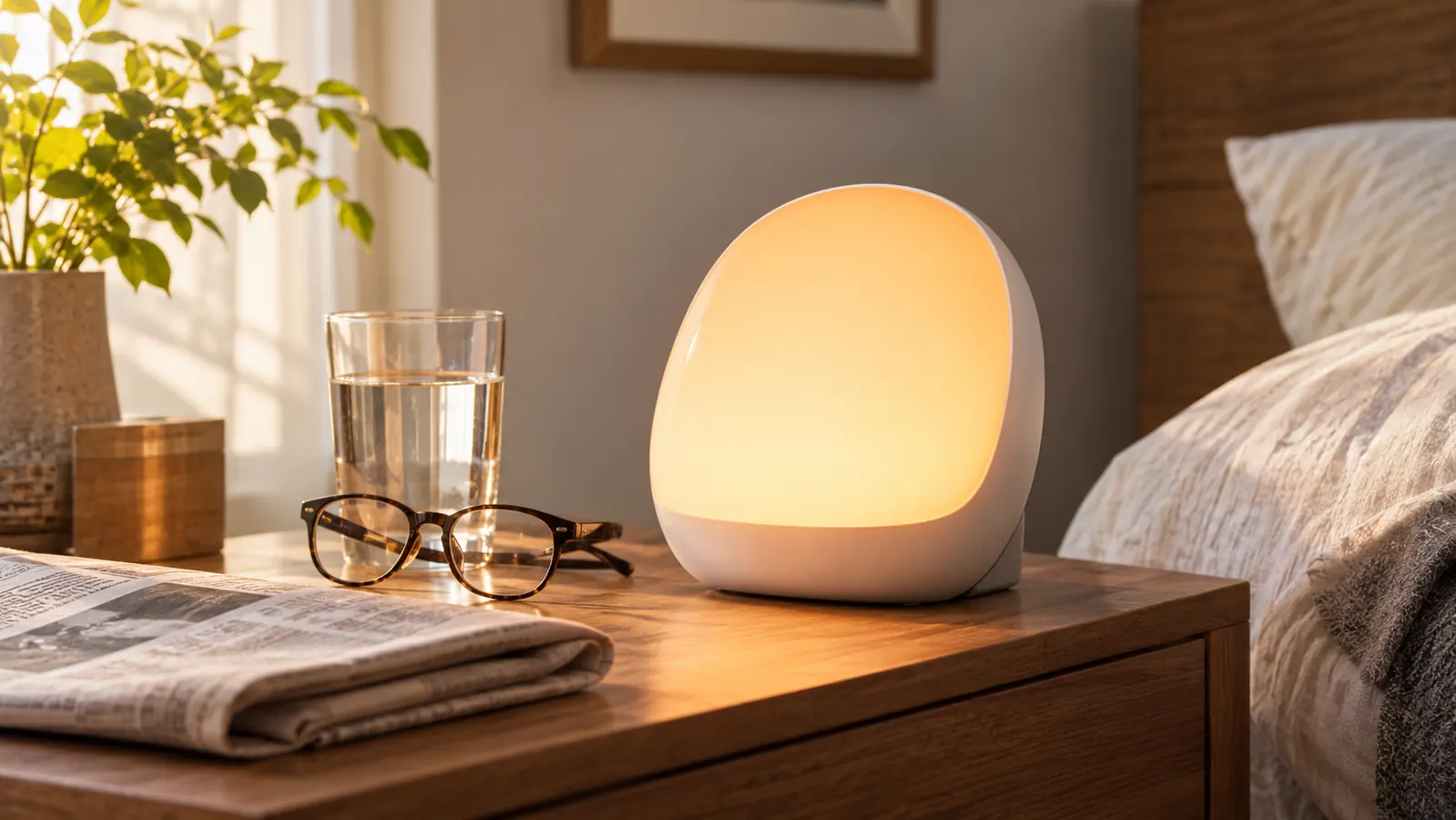
The light starts at 6:00. Slow, warm, and low at first, and it builds across the full half hour until the alarm sound arrives at 6:30. You would think you would notice it happening. Most mornings I do not, not consciously. What I notice is that I am already closer to the surface when the birds start, and the birds are a much gentler pull than a buzzer was. I picked the bird sound out of the five available on the first evening I set it up and I have never changed it.
The honest version is that it took about two weeks before dark mornings felt easier. Not two nights. Two weeks, sometime in early November, and one morning I got up and realized the getting up had not been the usual fight. Before that, I would say I was still waiting to be impressed. If you buy one of these expecting the first morning to feel different, you will probably be disappointed and you will probably write a one-star review. Give it a fortnight before you decide anything.
I also use the sunset now and then, maybe a couple of times a month, when I want the room to wind down. It fades the light out over a set time instead of shutting off. It is pleasant and I would not miss it much if it were gone. The FM radio I turned on exactly once to confirm it worked. It did. I have not touched it since, and I suspect I am not the only person who owns this lamp and ignores that feature entirely.
Setting the thing up took one evening and one slow read of the card in the box. You set the alarm time, you choose one sound out of the five, and then you leave it alone. I set 6:30 and the birds, and the sunrise begins at 6:00 on its own, a half hour ahead, without me touching anything again. That is the entire ritual. What I have changed since that first evening is nothing, and there is nothing to change: no app to fiddle with, no account to make, no firmware, no pairing. It is a lamp with a digital display and a power cord, and once it is set it stays set until you decide otherwise. That suits a man who spent thirty years setting an alarm with his thumb at four in the morning.
The Parts Nobody Mentions
First, the footprint. This is a round lamp and it takes up real estate. My nightstand is small, and the Philips plus my glasses use most of it. If your nightstand is one of those narrow shelf tables, measure it before you order rather than after. The listing gives the weight at 1,113 grams, which is roughly two and a half pounds, and it sits like something with heft to it, not a flimsy plastic puck you knock sideways reaching for a glass of water in the dark.
Second, the display dims automatically, and it needs to. A bright digital readout in a dark bedroom is its own small problem, and this one settles down to something you can live with. There are twenty brightness settings on the reading lamp function, and I keep mine well below the top of that range. When I do read in bed it is plenty of light for a paperback without lighting up Joyce's side of the room. I have never once moved that setting up and then been bothered by it later in the night.
Third, and this one caught me out: it is corded and it wants to stay put. There is no carrying it to the bathroom and no moving it to the other side of the bed on a whim unless you want to fish the cord out from behind the nightstand and redo the whole arrangement. Mine has not moved since the day it arrived, and I have decided that is a feature rather than a fault. A lamp with a cord stays where you put it, and where I put it is where I want it at six in the morning.
What I Liked
- The sunrise starts a full half hour before the alarm, at 6:00 for a 6:30 wake-up, and builds slowly
- Five natural wake-up sounds, and the bird one is gentle enough to actually get you up
- Tap snooze on top of the lamp, so there is no hunting for a button in the dark
- The display dims automatically and does not light the room at 2am
- Doubles as a bedside reading lamp with 20 brightness settings
- Sunset simulation is there for winding down when you want it
Where It Falls Short
- It takes a real amount of nightstand space and it is not light
- It is corded, so it stays exactly where you plug it in
- The FM radio is included whether you want it or not, and I do not
- It does nothing for the four hours of night before the sunrise starts
- It does not work on a morning you sleep through with a sleep mask still on
- It took about two weeks before mornings actually felt easier
It took about two weeks before dark mornings felt easier. Not two nights. Two weeks, sometime in early November, and one morning I got up and realized the getting up had not been the usual fight.
The Snooze Button and My Own Weakness
The tap snooze works. You reach out and touch the top of the lamp and the alarm holds off. I have used it maybe a dozen times in thirteen months, which I consider a small victory given my history with buzzers. But I will tell you the truth, which is that on the mornings I have used it, I have used it badly. The light is already on. The birds have already gone. Tapping the lamp gives you more minutes of lying in a bright room, which is not actually restful, it is just stubbornness with better lighting.
If you are a person who can hit a snooze button six times without thinking, this lamp will not fix that character trait. It just makes it a nicer-looking mistake. What it does do is make the first moment of the day less hostile, and for me that alone was worth the change from a drawer full of old habits. I am not going to pretend a lamp rebuilt my character. It made one hard half hour softer and I took the trade.
What It Does Not Do
This is the section I wish somebody had written for me before I spent the money, so I am writing it now, plainly, and you can decide what to do with it.
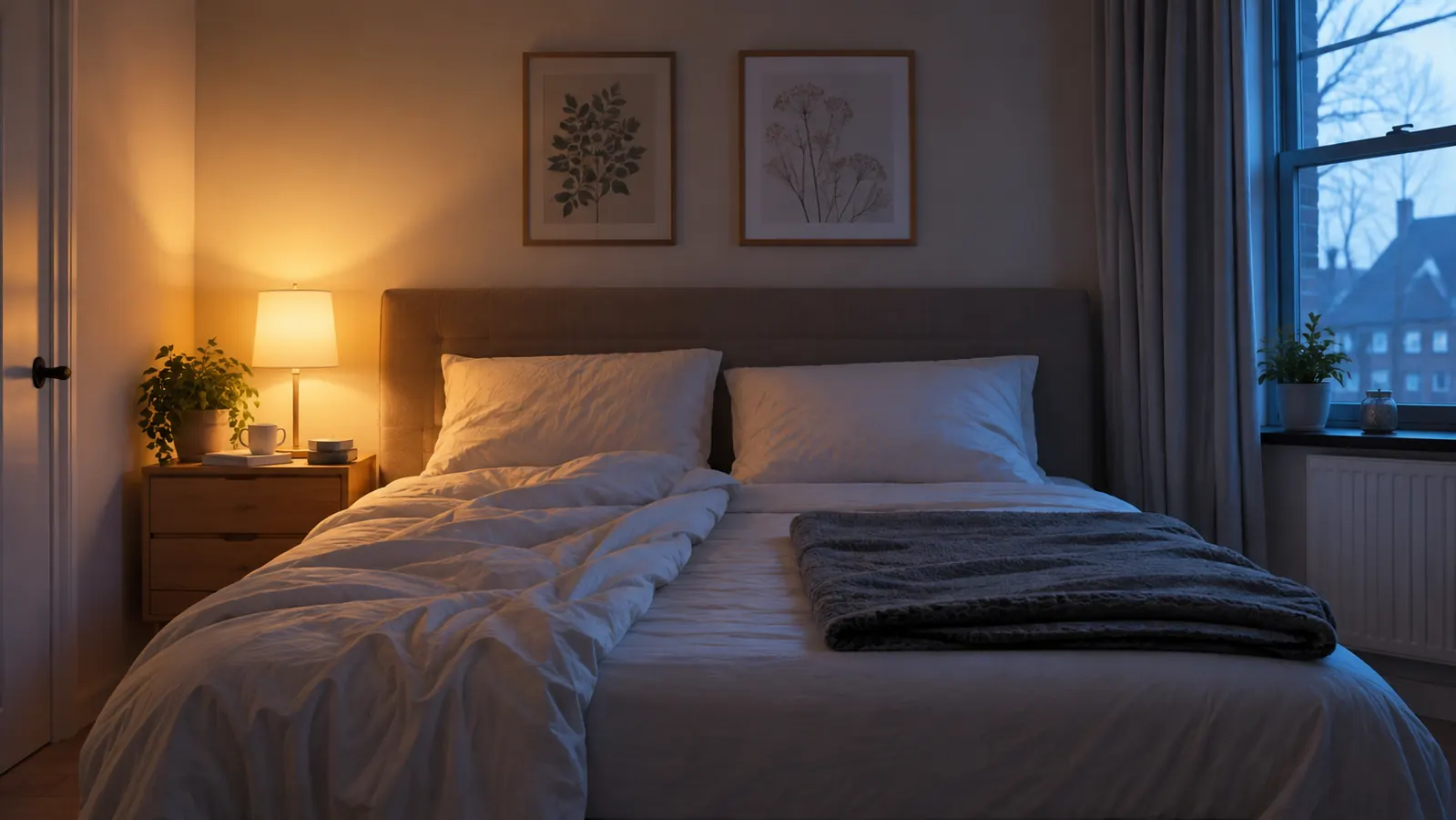
It does not make you sleep better. Not one bit. The trouble I had in the night had nothing to do with waking up in the dark. The lamp helps the last thirty minutes of the night. It does nothing for the four hours before that. On a bad night I still wake at 3am and lie there, and the Philips sits quietly on the nightstand doing absolutely nothing about it, because that is not the job I bought it for.
It does not beat a sleep mask, and this is the awkward part of my own setup. I wear a contoured sleep mask for the streetlight outside my window, and most mornings it comes off at my 4am bathroom trip and lands on the nightstand, so the sunrise reaches me fine. But on a morning I sleep straight through with the mask still on, the light cannot get through and the bird sound does the waking instead. So my two purchases, the mask and the lamp, do not fully cooperate. I knew this going in and I bought both anyway, because the mask earns its keep on the light coming in and the lamp earns its keep on the light going out.
It does not replace a clock radio if you love your clock radio. It is a lamp with a clock in it, not the other way around. If what you want is a radio on your nightstand and the light is secondary, you will find you bought more radio than you wanted. And it does not care whether you have to be up at 6:30. It will run the same slow sunrise for any alarm time you give it, which is fine, but it means the lamp is not thinking about your schedule. You are.
Living With It for a Year
A winter of dark mornings is a real test, and this thing passed it. January in Green Bay, up at 6:30 in a room that would otherwise be black as a closet, and the light is doing the persuading. I never once had the old argument with the buzzer where I lie there resenting the noise and the day and the whole arrangement. When the sun does not come up until well after you are at the kitchen table, having a small sun of your own on the nightstand turns out to matter more than I expected.
Summer is where you notice what you paid for and what you did not. In June the sun is already up and the Philips is redundant. It still runs, and the warm light on a bright morning is a bit silly, but I did not turn the sunrise off because I did not want to relearn the settings in October. So for the bright part of the year the lamp is doing a job the sky would do for free. I have made my peace with that. It is the same peace I make with a snow shovel in July.
The routine has settled into something I can describe in one breath. In bed about 10pm, awake once around 4am for the bathroom, back down again, and then the light starts at 6:00 and the birds come at 6:30. That 4am trip is the one place the mask and the lamp share a nightstand, and it is where the mask ends up for the rest of the night. Bad nights still happen. I am not going to tell you a lamp fixed a sixty-one-year-old man. I will tell you the mornings got easier and the nights stayed about the same.
Joyce gets up later than I do and puts up with it. She turns her face away from the light and goes back to her side. She has never complained about it. If your partner is a light sleeper who wakes at the first glow, that is worth an honest conversation before you buy, because the whole point of the thing is light in a dark room where somebody else is also sleeping.
Who This Is For
You get up before the sun for a good part of the year and the dark is what makes the getting up hard. You live far enough north that November mornings are black at alarm time. You are not looking for a medical fix and you have already had the obvious things checked with your own doctor. You want the last half hour of your night to be gentle rather than sudden. You have a nightstand with room on it and an outlet within reach. You are willing to give it two weeks before you make up your mind about it.
If that is you, the Philips SmartSleep does one narrow job well and honestly, and I would buy it again. Not because it is remarkable, but because thirteen months in I have not once thought about taking it off the nightstand, and that is the only review that matters in the end.
Who Should Skip It
Skip it if your problem is falling asleep rather than waking up, because this addresses the wrong end of the night entirely. Skip it if your bedroom already fills with daylight at your alarm time for most of the year, since you would be paying for a function the sky provides for free from April through September. Skip it if you are not willing to give it a couple of weeks, because the first three mornings feel like a lamp with extra steps and a longer wait for the noise.
Skip it, also, if you are short on nightstand space or want a clock you can tuck on a shelf. It is a lamp and it takes the room a lamp takes. And skip it if a partner in the same bed wakes at any change in light, because that is a household problem no feature can solve, no matter how many brightness settings it has.
What I would say plainly is this. The Philips SmartSleep is not remarkable. It is one of the most boring purchases I have made in years, and I mean that as praise. It sits on my nightstand, it starts glowing at 6:00, the birds come at 6:30, and the hardest part of my morning stopped being the first thirty seconds of it. One purchase, one winter of mornings that did not start with a fight. That is the whole case for it, and it is enough.
Thirteen months in and it has not left the nightstand
The HF3520 wakes you with a half hour sunrise and five natural sounds, with tap snooze, a dimmable display, and 20 brightness settings for reading. If dark mornings are the thing you are fighting, this is aimed straight at it.
Amazon Check Today's Price on Amazon →